
Benefits of Minimally InvasiveSurgery: What Patients Should Know
Introduction: Can Major Surgery Really Be Done Through Tiny Cuts?
Years ago, many abdominal operations required one large cut.
Today, surgeons can perform many procedures through just a few small openings using a camera and specially designed instruments.
This approach is called minimally invasive surgery.
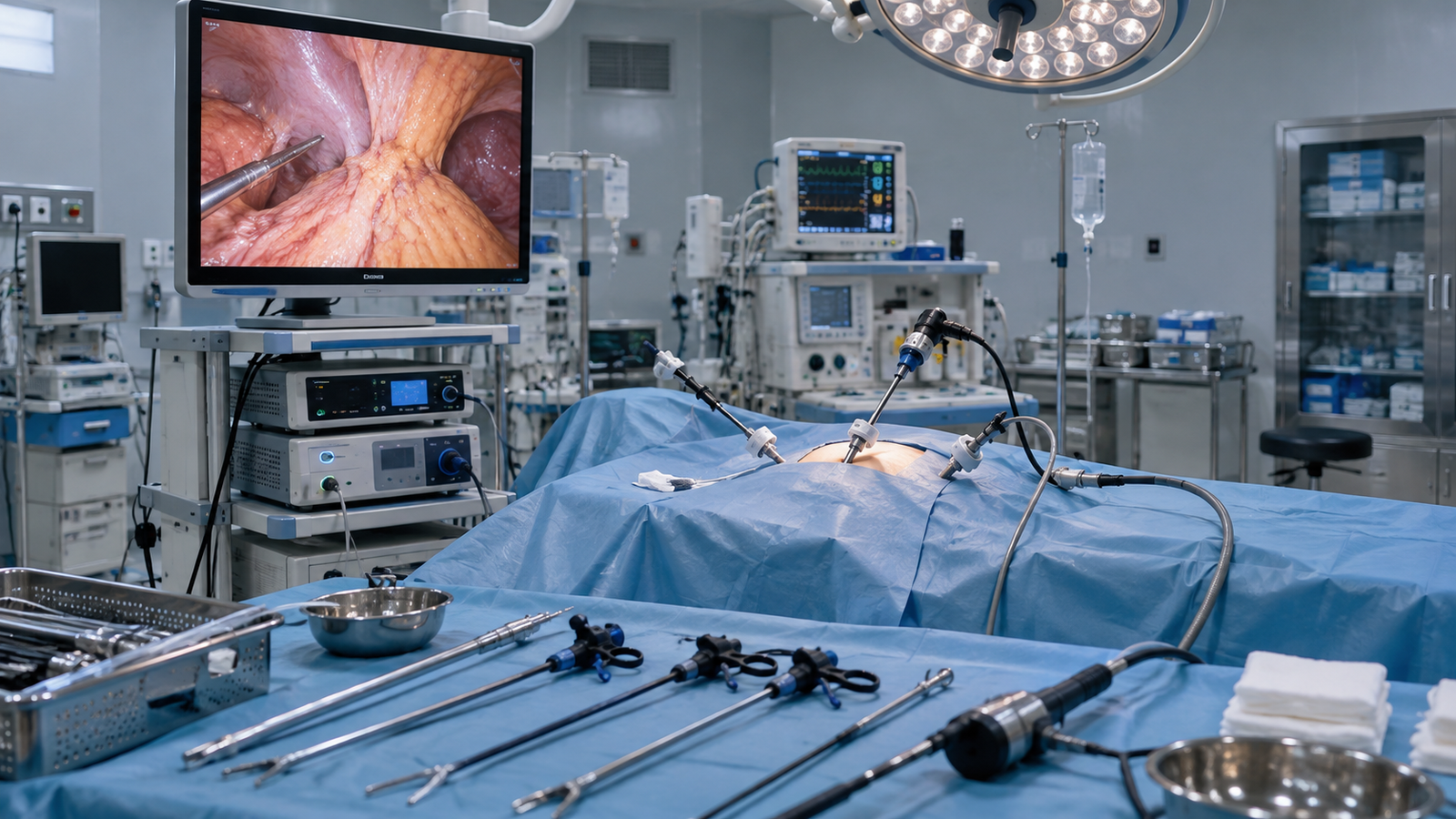
Laparoscopic surgery, often called keyhole surgery, is one of the most common types of minimally invasive surgery. A small camera gives the surgeon a magnified view inside the body while surgical instruments are passed through other small incisions.
For appropriately selected patients and procedures, the advantages can include less postoperative pain, smaller scars, shorter hospital stays and a quicker return to normal activities compared with traditional open surgery.
But minimally invasive surgery is not automatically better for every patient.
The safest surgical approach depends on the disease, complexity of the operation, previous surgeries, overall health and the surgeon's assessment.
Let's understand the benefits of minimally invasive surgery in simple language.
What Is Minimally Invasive Surgery?
In traditional open surgery, the surgeon usually makes a larger incision to directly reach the organ that needs treatment.
During minimally invasive surgery, the surgeon performs the procedure using smaller openings.
In laparoscopic abdominal surgery, a thin camera called a laparoscope is inserted through one of these openings.
The camera sends a magnified image to a monitor.
The surgeon then performs the procedure using long, specialised instruments inserted through the other small openings.
Some operations may also be performed using robotic-assisted technology, where the surgeon remains fully in control of the surgical instruments.
Minimally invasive techniques are used for many procedures involving the abdomen and pelvis.
What Is Minimally Invasive Surgery?
In traditional open surgery, the surgeon usually makes a larger incision to directly reach the organ that needs treatment.
During minimally invasive surgery, the surgeon performs the procedure using smaller openings.
In laparoscopic abdominal surgery, a thin camera called a laparoscope is inserted through one of these openings.
The camera sends a magnified image to a monitor.
The surgeon then performs the procedure using long, specialised instruments inserted through the other small openings.
Some operations may also be performed using robotic-assisted technology, where the surgeon remains fully in control of the surgical instruments.
Minimally invasive techniques are used for many procedures involving the abdomen and pelvis.
Causes: Why Might Someone Need Minimally Invasive Surgery?
Many different medical conditions may eventually require surgical treatment.
Common examples include:
Gallstones
Symptomatic gallstones may require removal of the gallbladder through laparoscopic cholecystectomy.
Hernia
Some inguinal, ventral and other abdominal hernias can be repaired using minimally invasive techniques.
Appendicitis
An inflamed appendix can often be removed laparoscopically.
Severe GERD
Selected patients with gastroesophageal reflux disease may undergo minimally invasive anti-reflux surgery when appropriate.
Obesity
Certain bariatric procedures, including sleeve gastrectomy and gastric bypass, are commonly performed using minimally invasive techniques.
Colon and Digestive Conditions
Selected colon operations can also be performed laparoscopically.
SAGES lists procedures including hernia repair, appendectomy, gallbladder removal, colon resection, anti-reflux operations and bariatric surgery among common applications of minimally invasive techniques.
Diagnosis: How Does a Surgeon Decide Which Approach Is Best?
Before recommending an operation, the doctor first needs to identify the exact problem.
Evaluation may involve:
- Medical history
- Physical examination
- Blood tests
- Ultrasound
- CT scan
- MRI
- Endoscopy
- Other condition-specific tests
Once the diagnosis is clear, the surgeon decides whether the procedure can be performed safely using a minimally invasive approach.
The decision may depend on:
- Type of disease
- Severity of the condition
- Previous abdominal surgery
- Scar tissue
- Infection or inflammation
- Patient's age and overall health
- Complexity of the planned operation
- Surgical experience and available facilities
The smallest incision is not always the safest operation.
Safety comes first.
Treatment: How Is Minimally Invasive Surgery Performed?
Most abdominal laparoscopic operations are carried out under general anaesthesia, meaning the patient is asleep during surgery.
The surgeon usually makes a small opening near the belly button.
Carbon dioxide gas may then be introduced into the abdomen to create working space.
A laparoscope is inserted, allowing the surgeon to see the organs clearly on a monitor.
Other tiny incisions are used for specialised instruments.
The required operation is then performed.
At the end of the procedure, the instruments are removed and the small incisions are closed.
The exact number and size of the openings vary according to the operation.
Benefits of Minimally Invasive Surgery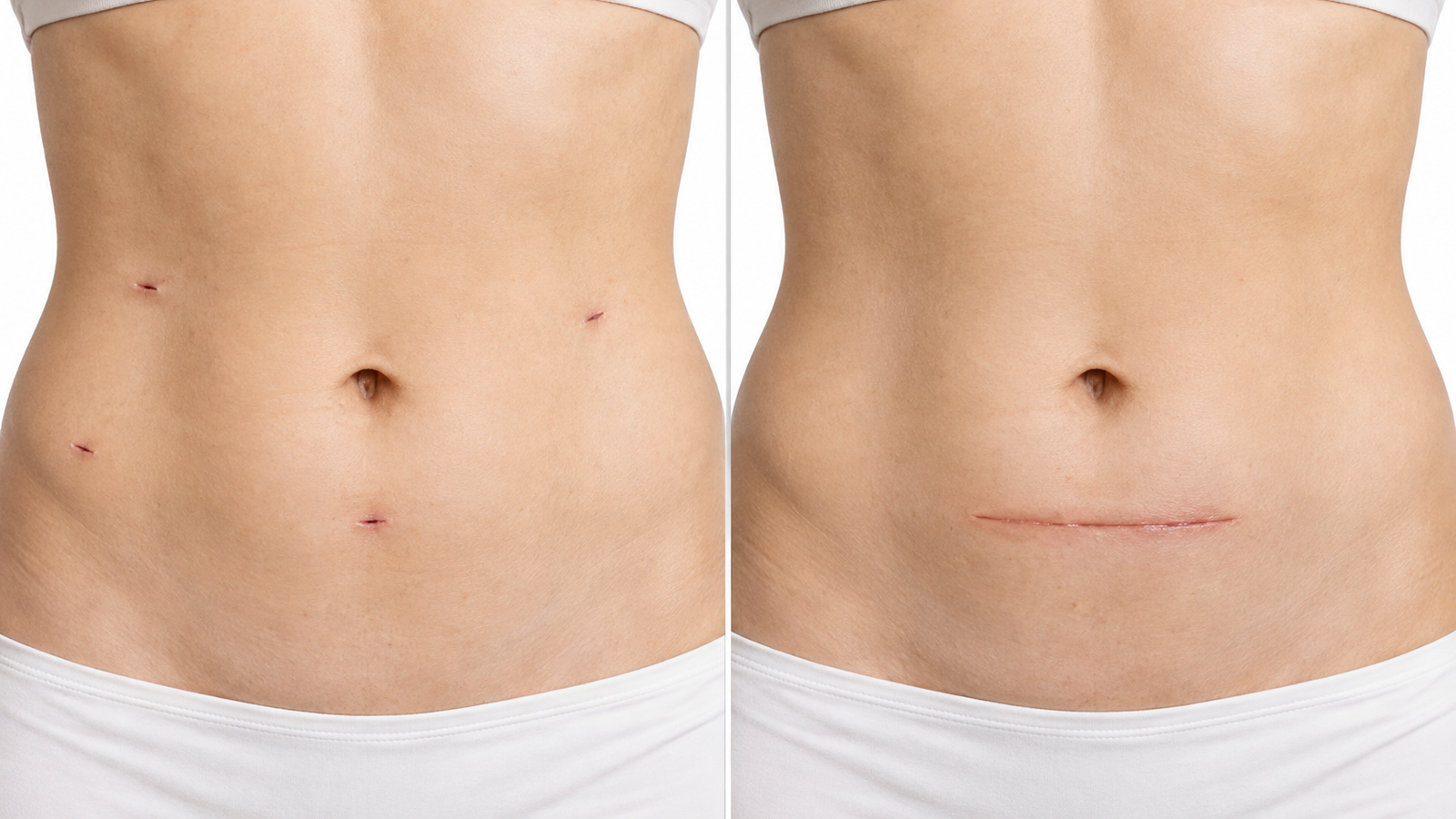
This is where minimally invasive techniques can make a major difference for suitable patients.
1. Smaller Incisions
One of the clearest benefits of minimally invasive surgery is the use of smaller cuts compared with many traditional open operations.
Smaller incisions generally mean less disruption to the abdominal wall.
They also usually leave smaller scars.
2. Less Pain After Surgery
Smaller surgical wounds can mean less postoperative discomfort for many procedures.
SAGES identifies less pain after surgery as one of the common advantages of minimally invasive techniques.
That does not mean surgery will be completely painless.
Some soreness is normal, and pain varies depending on the operation and individual patient.
3. Faster Recovery
A major reason patients ask about laparoscopy is recovery.
Compared with open surgery for many procedures, minimally invasive techniques may allow patients to regain normal movement and return to daily activities sooner.
Recovery time still depends greatly on what operation was performed.
A small skin incision does not mean the body has finished healing internally.
4. Shorter Hospital Stay
Many minimally invasive operations require less time in hospital than comparable open procedures.
Some patients may even be discharged on the same day or after a short stay, depending on the surgery and their health.
Complex operations may still require several days of hospital care.
5. Smaller Scars
Because laparoscopic surgery generally uses several small openings instead of one large abdominal incision, scars are usually smaller.
SAGES lists improved cosmetic results and smaller scars among the potential advantages of laparoscopic procedures.
Appearance should never be the main reason for choosing an operation, but it can be an added advantage.
6. Earlier Return to Normal Activities
Patients undergoing suitable minimally invasive procedures may be able to return to work and normal activities sooner than patients recovering from an equivalent open operation.
Someone with a desk job may return sooner than a person doing construction, lifting or other physically demanding work.
Always follow your surgeon's activity restrictions.
7. Clear Magnified View for the Surgeon
The laparoscopic camera produces an enlarged view of the surgical area on a monitor.
This helps the surgeon see internal structures in detail while operating through small openings.
Modern camera systems and specialised instruments have made increasingly complex procedures possible using minimally invasive techniques.
8. Potentially Lower Risk of Some Wound Problems
Because minimally invasive surgery uses smaller openings, certain procedures may have fewer wound-related problems compared with open surgery.
For example, SAGES notes lower risks of infection and healing problems among the potential advantages of minimally invasive ventral hernia repair.
The exact risk reduction depends on the procedure and patient.
Open Surgery vs Minimally Invasive Surgery
Patients often ask:
“Is laparoscopic surgery always better than open surgery?”
No.
Minimally invasive surgery can provide important advantages, but open surgery still has an essential role.
Minimally Invasive Surgery May Offer:
- Smaller incisions
- Less postoperative pain in many cases
- Shorter hospital stay
- Smaller scars
- Faster return to routine activities
Open Surgery May Be Necessary When:
- The disease is very complex
- There is severe inflammation
- There is extensive scar tissue
- Heavy bleeding occurs
- Anatomy cannot be seen safely
- A minimally invasive operation cannot be completed safely
Sometimes a surgeon begins with laparoscopy but decides to convert to an open operation.
Conversion to open surgery does not necessarily mean something went wrong.
It can be a deliberate safety decision.
Recovery After Minimally Invasive Surgery
Recovery varies greatly depending on the operation.
After laparoscopic surgery, some patients may experience:
- Mild-to-moderate incision pain
- Abdominal bloating
- Tiredness
- Nausea
- Temporary shoulder-tip discomfort from the gas used during surgery
Patients are often encouraged to begin gentle movement when medically safe.
The NHS notes that laparoscopy generally has a faster recovery time than comparable traditional surgery.
During recovery:
- Take medicines as instructed
- Keep wounds clean
- Walk gently when advised
- Stay hydrated
- Follow dietary instructions
- Avoid heavy lifting until cleared
- Attend follow-up appointments
Do not judge your internal recovery only by how the small wounds look outside.
Possible Complications of Minimally Invasive Surgery
Every surgical procedure has risks.
Possible complications can include:
- Bleeding
- Infection
- Blood clots
- Anaesthesia-related problems
- Injury to nearby organs
- Injury to blood vessels
- Hernia at an incision site
- Need for another procedure
- Conversion to open surgery
The type and likelihood of complications vary according to the operation.
Contact your healthcare team if you develop worsening pain, fever, increasing redness, significant swelling, persistent vomiting, breathing difficulty or unusual wound discharge after surgery.
Is Minimally Invasive Surgery Suitable for Everyone?
No.
This is one of the most important things patients should understand.
Even when a procedure can technically be performed laparoscopically, it may not be the safest approach for every individual.
SAGES advises that minimally invasive procedures have many advantages but may not be appropriate for some patients, making proper surgical evaluation essential.
The correct question is not:
“Which surgery has the smallest cut?”
It is:
“Which approach gives me the safest and most effective treatment for my condition?”